
Common Causes and Solutions for Non-Round Finished Products of Seamless Round Pipe Forming Machines – High-Precision Round Pipe Equipment
Seamless Round Pipe Forming Machine: Fix Poor Roundness & Oval Deformation
Table Of Contents
1. Introduction
In the ventilation duct and metal processing industries, the seamless round pipe forming machine is a crucial piece of equipment. However, many users encounter issues such as poor pipe roundness, oval deformation, or misaligned seams during actual operation. These problems not only affect aesthetics but also make installation difficult. In severe cases, rework is required, increasing production costs.
This article analyzes the common issue of “non-round finished products of seamless round pipe forming machines” from five perspectives: raw materials, equipment setup, mold condition, operation methods, and equipment structure, helping customers quickly identify and solve problems.
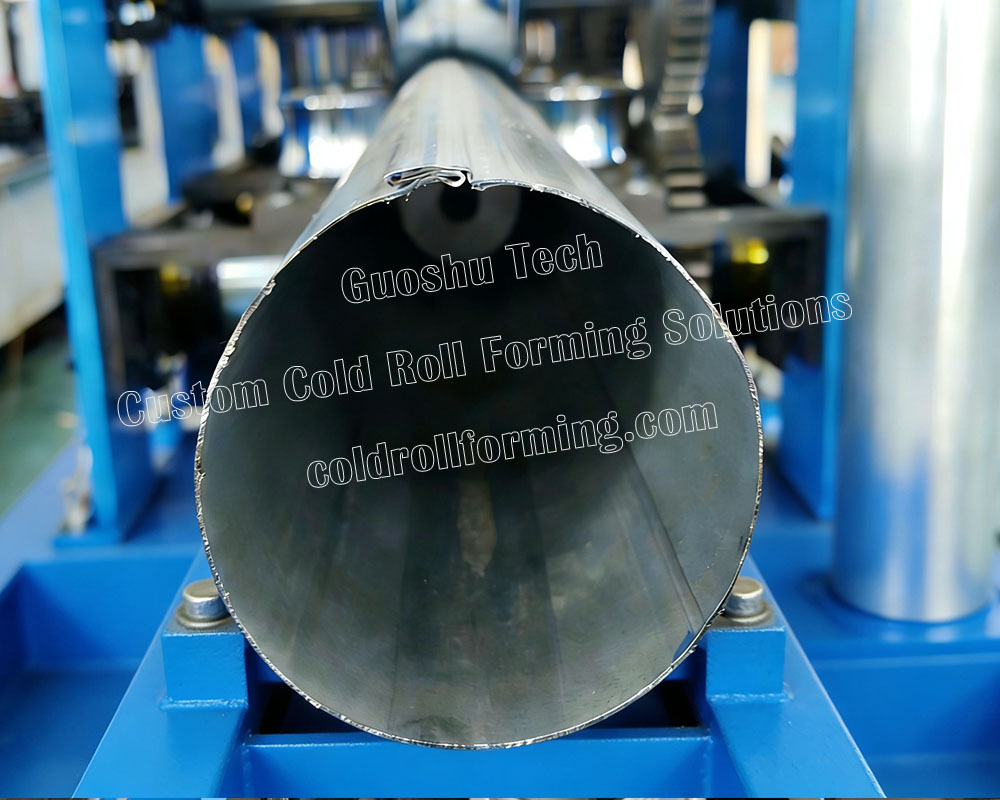
2. Variations in Metal Sheet Quality
Raw materials have a significant impact on whether a pipe can be formed into a standard round shape. If you are using galvanized or stainless steel sheets, consider the following factors, which can affect pipe roundness:
- Uneven sheet thickness
- Excessive internal stress in the sheet
- Obvious surface ripples or warping
During rolling and seam forming, these issues cause uneven force distribution, gradually deviating from the central axis. Even high-precision equipment may struggle to correct this. To achieve perfectly round pipes, choose smooth sheets with uniform thickness whenever possible.
3. Improper Machine Adjustment
When finished pipes are not perfectly round, many users first suspect equipment quality, but the problem often lies in machine setup. Common issues include:
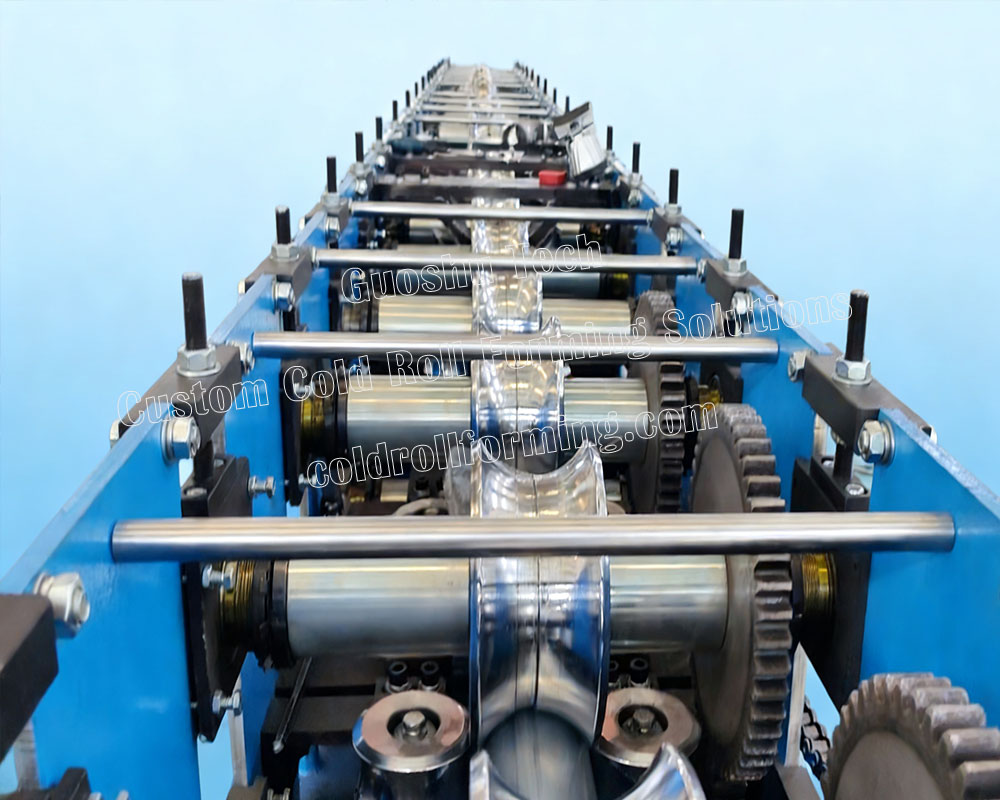
- Improper spacing between forming rollers
- Unequal pressure from upper and lower rollers
- Misalignment between seam rollers and forming rollers
When roller forces are unbalanced, the pipe gradually leans to one side during rotation, resulting in oval or “banana-shaped” products. Regular precision calibration and fine-tuning of the seamless round pipe forming machine parameters can significantly improve pipe roundness.
4. Worn Molds or Rollers
Long-term use inevitably leads to wear on molds and rollers, affecting the forming trajectory. Typical signs include:
- One side forming tightly, the other loosely
- Local deformation at pipe ends
- Uneven seam width
These issues may be subtle at first but worsen as production volume increases. Enterprises are advised to regularly inspect and replace worn parts to prevent minor wear from causing major defects.
5. Improper Operation
Even the best metal processing equipment requires proper handling. Some users prioritize efficiency while ignoring critical factors such as:
- Excessive feed speed
- Sheets not centered before entering the forming zone
- Manual correction using external force
These practices disrupt the machine’s force balance, causing pipe deviation and affecting roundness. Implementing standardized operating procedures and employee training is essential to ensure product quality.
6. Insufficient Machine Rigidity
Mid-to-low-end or aging seamless round pipe forming machines often have insufficient frame rigidity or structural deformation, affecting final pipe roundness. Even minor deformations under overload conditions can appear in the finished product.
If roundness problems persist despite proper adjustments, upgrading or replacing the equipment should be considered.
7. Conclusion
Poor roundness in products from seamless round pipe forming machines is rarely caused by a single factor. It is usually the result of combined influences from raw materials, equipment status, mold wear, and operation methods. By systematically identifying causes and optimizing the production process, companies can improve pipe forming quality, reduce rework, and enhance overall production efficiency.
For enterprises aiming for long-term development in duct manufacturing and metal processing, focusing on these details is often more important than simply expanding production capacity.
8. Frequently Asked Questions (FAQ)


Book
Name:*
Tel:*
WhatasApp*
Email*
Remarks:*
Upload File
Nota:Hasta 10 archivos, cada uno dentro de 500 M


