
How to Choose High-Quality Highway Guardrail Roll Forming Machine: 5 Key Factors (2026 Guide)
How to Choose High-Quality Highway Guardrail Roll Forming Machine: 5 Key Factors (2026 Guide)
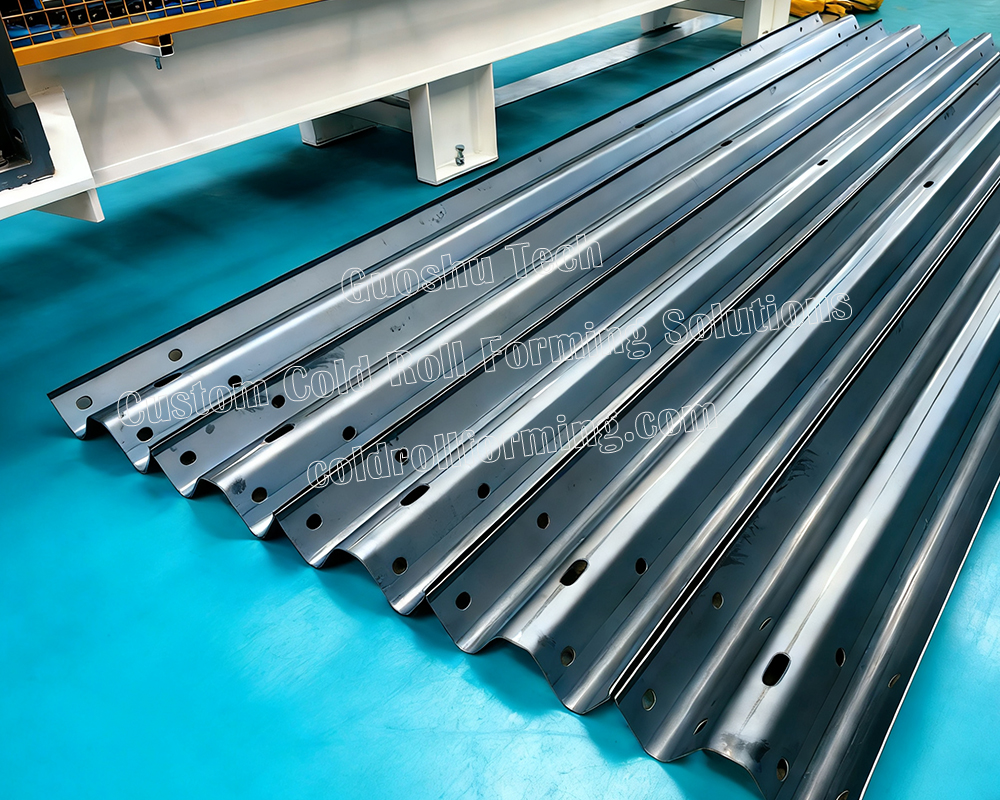
In the era of standardized and refined highway traffic safety facility construction, the quality of highway guardrail panels directly relates to driving safety. As the core equipment for guardrail production, a high-quality highway guardrail roll forming machine not only ensures the precision and durability of finished products but also helps manufacturers improve production efficiency, reduce costs, and gain a competitive edge in the global market. Whether you're a professional guardrail producer or a traffic engineering contractor, selecting the right guardrail panel equipment requires comprehensive consideration of technical performance, core components, automation level, and supplier strength. This guide details the 5 key factors to help you make an informed decision, with content optimized for Google SEO to help you better understand industry standards and procurement essentials.
1. Forming Precision: Meet International Standards with Millimeter-Level Error Control
Precision is the primary criterion for evaluating highway guardrail roll forming machines. High-quality guardrail panels must comply with international standards such as AASHTO M180 (American Association of State Highway and Transportation Officials) and EN 1317 (European Standard for Road Restraint Systems), as well as local national standards (e.g., JTG D81-2017 in China). A reliable roll forming machine should be equipped with an advanced servo control system and multi-pass roll forming technology to achieve millimeter-level error control.
Key precision indicators to focus on:
- Waveform symmetry error ≤ 0.5mm;
- Straightness deviation ≤ 1mm/m;
- Hole position accuracy (for guardrail connection holes) ≤ 0.3mm.
These indicators ensure that guardrail panels fit perfectly during installation, avoiding gaps that reduce protective performance. Additionally, the machine should support quick mold changes to adapt to multi-specification production (e.g., W-beam, 3-wave beam, 2-wave beam guardrails), improving equipment utilization and meeting diverse customer needs.
2. Core Components: Solid Alloy Steel Rollers for Long-Term Stable Operation
Rollers are the "heart" of the roll forming machine, and their material and structure directly affect equipment lifespan and product quality. High-quality machines adopt solid alloy steel rollers instead of hollow rollers. Solid rollers have superior rigidity and deformation resistance, which can maintain stable pressure during 24/7 continuous operation, ensuring consistent forming quality of each guardrail panel.
When purchasing, pay attention to the roller's heat treatment process (e.g., carburizing and quenching), which ensures surface hardness ≥ HRC58 and excellent wear resistance. This reduces roller wear and replacement frequency, lowering long-term maintenance costs. In contrast, hollow rollers are cheaper but prone to bending and deformation under high-pressure and long-term operation, leading to reduced product precision and increased scrap rates.
3. Pressure & Speed Regulation: Intelligent Adaptation for Efficiency & Quality
Different thicknesses of base materials (2.5mm-4.0mm galvanized steel sheets) require precise pressure adjustment during forming. A high-quality highway guardrail roll forming machine should be equipped with a segmented pressure adjustment system, which can independently adjust the pressure of each roller to avoid base material cracking (excessive pressure) or unsatisfactory waveform (insufficient pressure).
Meanwhile, the forming speed should be linked with subsequent cutting and punching processes, supporting frequency conversion speed regulation (0-15m/min adjustable). This realizes integrated continuous production of "forming - punching - cutting", greatly improving production capacity and reducing errors caused by manual intervention. The stable coordination of pressure and speed is the key to balancing production efficiency and product quality.
4. Automation Configuration: Minimize Manual Operation for Batch Consistency
Manual operation is a major factor affecting product consistency. High-end guardrail roll forming machines integrate full-process automation functions, including automatic feeding, automatic length fixing, automatic cutting, and automatic stacking. Controlled by a PLC programmable system, these functions minimize manual intervention, ensuring consistent quality of batch-produced guardrail panels.
For example, the photoelectric positioning device can accurately control the punching position of guardrail panels, avoiding hole position deviation; the automatic stacking system can neatly stack finished products, facilitating subsequent transportation and storage. Automation not only improves production efficiency but also reduces labor costs and the risk of operational errors, which is particularly important for large-scale production enterprises.
5. Supplier Strength: Prioritize Technical Capability & After-Sales Service
The quality of the machine is the foundation, and the supplier's service is the guarantee. When selecting a supplier, focus on the following three aspects:
- Customization Capability: Can the supplier provide customized solutions for special-specification guardrails (e.g., non-standard waveforms, extended guardrails) according to customer needs?
- After-Sales Service System: Does the supplier offer free on-site installation, commissioning, and operator training? Is there a 24-hour responsive after-sales team for nationwide service (e.g., wearing parts replacement, fault diagnosis)?
- Industry Cases: Does the supplier have cooperation cases with large traffic engineering enterprises or leading guardrail manufacturers? Actual operation cases can verify the machine's performance and reliability.
Final Thoughts: Comprehensive Evaluation for Long-Term Benefits
Selecting a high-quality highway guardrail roll forming machine is a comprehensive decision involving technical parameters, core components, automation configuration, and supplier strength. By focusing on the 5 key factors mentioned above, you can choose equipment that adapts to your production needs, improves product quality and production efficiency, and helps your enterprise gain a competitive advantage in the global market. If you need personalized equipment recommendations or detailed technical parameters, feel free to contact our professional team for support.
Email: wxxl2024@gmail.com
WhatsApp / WeChat: +86 18921519969
Website: coldrollforming.com
Address: No.6, Xinshan Road, Xueyan Town, Wujin District, Changzhou, Jiangsu, China


Book
Name:*
Tel:*
WhatasApp*
Email*
Remarks:*
Upload File
Nota:Hasta 10 archivos, cada uno dentro de 500 M


